
Custom plush toys have become a popular choice for businesses, brands, and individuals looking to create unique, personalized products. Whether for promotional campaigns, retail, or special events, the decision to balance cost and quality is crucial. While cost often dictates initial purchasing decisions, quality significantly impacts customer satisfaction, durability, and brand reputation. This article explores the key factors in conducting a cost vs. quality analysis for custom plush toys.

1. Understanding Cost Factors
The cost of custom plush toys is influenced by several factors, including:
Material Selection: High-quality materials like ultra-soft fabrics, hypoallergenic stuffing, and durable stitching increase costs but ensure longevity and comfort.
Design Complexity: Intricate designs with detailed embroidery, custom patterns, and unique shapes require more labor and advanced machinery, raising production costs.
Production Volume: Larger order quantities often benefit from economies of scale, reducing the cost per unit. However, smaller batches may incur higher costs due to setup and manufacturing inefficiencies.
Custom Features: Add-ons like sound modules, LED lights, or accessories such as clothing or props add to production costs.
Shipping and Packaging: Custom packaging or expedited shipping increases overall expenses, especially for international orders.
2. Quality Considerations
Quality determines the perception and usability of custom plush toys. Key quality factors include:
Material Durability: High-quality fabrics and threads ensure the toy can withstand frequent use without wear or tearing.
Craftsmanship: Precise stitching, well-proportioned designs, and attention to detail enhance the aesthetic and structural integrity of the toy.
Safety Standards: Plush toys, especially those for children, must comply with safety regulations (e.g., ASTM F963 or EN71). High-quality toys are less likely to pose choking hazards or contain harmful substances.
Softness and Comfort: Plush toys designed for comfort, such as those used as pillows or companions, require premium stuffing and fabrics for a luxurious feel.
3. Cost vs. Quality: The Trade-off
Achieving a balance between cost and quality is essential. Here are some scenarios to consider:
Low-Cost Options: Suitable for short-term uses, such as event giveaways or promotions. However, lower-quality toys may wear out quickly, reflecting poorly on a brand.
High-Quality Toys: Ideal for retail or collector’s items, as they justify a higher price point and enhance customer loyalty. Premium quality ensures durability, aesthetic appeal, and compliance with safety standards.
Mid-Tier Choices: A balance of cost and quality, mid-tier options are often suitable for small businesses or campaigns aiming to deliver value without overspending.
4. Long-Term Impact of Quality
Choosing quality over cost can provide long-term benefits:
Brand Reputation: High-quality plush toys create a positive impression, leading to repeat business and stronger brand associations.
Customer Satisfaction: Well-crafted toys meet or exceed expectations, reducing returns and complaints.
Longevity: Durable toys ensure lasting value, encouraging customers to recommend the product to others.

5. Strategies for Cost-Effective Quality
Balancing cost and quality doesn’t have to be an all-or-nothing decision. Here are strategies to optimize both:
Choose Reliable Manufacturers: Work with manufacturers experienced in custom plush toy production to ensure quality at competitive rates.
Simplify Designs: Reduce complexity in designs to save on production costs while maintaining visual appeal.
Order in Bulk: Take advantage of volume discounts to reduce the cost per unit.
Source Locally: Partnering with local manufacturers can reduce shipping costs and turnaround times.
Invest in Prototypes: Ordering samples before mass production helps identify potential issues and ensures the desired quality.

In conclusion, the choice between cost and quality for custom plush toys depends on the intended use, target audience, and budget. While cost savings might be tempting, investing in higher-quality toys often yields better long-term results, enhancing customer satisfaction and brand reputation. By carefully assessing production costs and prioritizing key quality features, businesses can create plush toys that strike the perfect balance between affordability and excellence.
Marine wall lights play a crucial role in ensuring safety, functionality, and aesthetic appeal aboard ships and coastal structures. Designed to withstand harsh maritime conditions, these lights must meet stringent requirements to ensure long-term performance. Below are the key design considerations that manufacturers and users should evaluate when selecting or designing marine wall lights.

1. Corrosion Resistance
Marine environments are characterized by high humidity and exposure to saltwater, which accelerates corrosion. Marine wall lights should be constructed from corrosion-resistant materials such as:
Marine-grade stainless steel
Brass or bronze
Aluminum with anti-corrosion coatings
These materials ensure durability and reduce the frequency of replacements, thereby lowering maintenance costs.
2. Ingress Protection (IP) Rating
A high IP rating is essential to protect the light fixture from water and dust. For marine applications, an IP rating of at least IP65 or higher is recommended. This ensures protection against strong water jets and environmental debris.
3. UV Resistance
Marine wall lights are often exposed to direct sunlight for extended periods. The housing and lens materials should be UV-stabilized to prevent discoloration, cracking, or brittleness over time. Polycarbonate or tempered glass with UV coatings are commonly used for this purpose.
4. Shock and Vibration Resistance
Marine vessels experience constant motion, vibrations, and impacts due to waves and engine operations. Lights should be designed with shock-absorbing materials and vibration-resistant mounting to maintain structural integrity and performance.
5. Energy Efficiency
With a growing focus on sustainability, LED Marine Wall Light has become the standard. LEDs offer:
Low power consumption
High brightness
Longevity (up to 50,000 hours)
Additionally, integrating dimming features or smart lighting controls can enhance energy efficiency.
6. Lighting Performance
The type and intensity of light should align with the purpose of the fixture. For example:
Warm white light (2700K-3000K) is suitable for indoor spaces, creating a cozy atmosphere.
Cool white light (4000K-5000K) is ideal for workspaces requiring enhanced visibility.
Uniform light distribution and minimized glare are critical for safety and comfort.

7. Compliance with Maritime Standards
Marine wall lights must comply with international maritime standards, such as:
IEC 60598: For general lighting equipment.
SOLAS (Safety of Life at Sea): For safety requirements aboard ships.
ABS or DNV-GL certifications: Indicating compliance with marine-specific testing standards.
8. Ease of Installation and Maintenance
Efficient installation and maintenance are crucial in maritime applications to minimize downtime. Features like modular designs, easy-access housings, and standardized mounting systems can simplify these processes.
9. Aesthetic Integration
In addition to functionality, marine wall lights contribute to the overall aesthetics of a vessel or structure. The design should complement the interior or exterior decor while maintaining a rugged, industrial appearance.
10. Environmental Considerations
Sustainable manufacturing practices, recyclable materials, and eco-friendly coatings should be prioritized to minimize the environmental impact of marine lighting systems.

Conclusion
Designing or selecting marine wall lights requires a balanced approach to functionality, durability, and aesthetics. By focusing on corrosion resistance, ingress protection, energy efficiency, and compliance with standards, manufacturers and users can ensure reliable performance in demanding marine environments. Whether used on ships or coastal structures, well-designed marine wall lights enhance safety and contribute to a vessel's overall operational efficiency.
Viscosity measurement is a critical parameter in industries ranging from food and beverages to pharmaceuticals and paints. Digital rotational viscometers have become a popular choice for accurate and reliable viscosity measurements due to their advanced features and ease of use. In this article, we will explore the different types of digital rotational viscometers, their functionalities, and their ideal applications.

1. Basic Digital Rotational Viscometers
These are the simplest and most user-friendly models of digital rotational viscometers. They are designed for straightforward viscosity measurements and are suitable for routine laboratory testing.
Key Features:
Digital display for direct viscosity readings.
Single-speed or limited-speed options.
Easy calibration and operation.
Applications:
Ideal for quality control in industries like food production and cosmetics.
Suitable for testing low-to-medium viscosity fluids.
2. Advanced Digital Rotational Viscometers
Advanced models come with enhanced features for precise measurements and a broader application range. They allow for more flexibility in viscosity testing.
Key Features:
Variable speed control for detailed viscosity profiling.
Multiple spindles for handling a variety of fluid types.
Real-time data recording and analysis.
Applications:
Research and development in chemical and pharmaceutical industries.
Testing fluids with varying viscosities, such as oils, paints, and adhesives.

3. High-Temperature Digital Rotational Viscometers
The high-temperature digital rotational viscometers are equipped to measure viscosity at elevated temperatures, essential for certain industrial applications.
Key Features:
Integrated or external temperature control systems.
Heat-resistant spindles and chambers.
Accurate viscosity measurements under high-temperature conditions.
Applications:
Petrochemical industry for testing lubricants and fuel oils.
Food industry for products like molten chocolate or syrups.
4. Small-Sample Digital Rotational Viscometers
Small-sample viscometers are designed for applications where only a minimal sample volume is available or required.
Key Features:
Requires as little as 1-2 mL of sample.
Precision spindles designed for small volumes.
Compact design for efficient use in laboratories with limited space.
Applications:
Biotechnology and pharmaceutical industries for testing expensive or limited-quantity materials.
Applications in academic research.
5. Portable Digital Rotational Viscometers
Portable models are lightweight and battery-operated, making them ideal for field use or applications requiring mobility.
Key Features:
Handheld design with a digital display.
Simple operation and easy transport.
Durable construction for use in challenging environments.
Applications:
Field testing in oil and gas exploration.
On-site viscosity testing in the construction and paint industries.
6. High-Shear Digital Rotational Viscometers
These viscometers are tailored for high-shear rate testing, which is critical in industries where fluids undergo rapid movement or deformation.
Key Features:
High-speed capabilities for shear-dependent viscosity testing.
Robust construction to withstand extreme shear conditions.
Real-time shear rate and stress measurements.
Applications:
Automotive industry for lubricants and fuel additives.
Paint and coating industry to ensure stability and performance.
7. Cone-and-Plate Digital Rotational Viscometers
This specialized type of viscometer uses a cone and plate configuration to measure viscosity, especially at low shear rates.
Key Features:
Consistent shear rate for accurate viscosity measurements.
Suitable for small sample volumes.
Precise control over temperature and shear conditions.
Applications:
Testing non-Newtonian fluids such as creams and gels.
Research applications in rheology and material science.

Conclusion
Digital rotational viscometers offer diverse capabilities tailored to specific industrial and laboratory needs. Choosing the right type of viscometer depends on the application, the nature of the fluid, and the required measurement precision. With advancements in digital technology, these instruments continue to evolve, providing unparalleled accuracy and convenience for viscosity measurements.
Offshore oil and gas exploration presents unique challenges, particularly in deepwater and ultra-deepwater environments. Traditional drilling techniques often struggle to manage the complex pressure dynamics encountered at significant depths. Dual Gradient Drilling (DGD) has emerged as an innovative solution, offering enhanced control and efficiency in these demanding settings.

What is Dual Gradient Drilling?
Dual Gradient Drilling is a technique designed to address the limitations of conventional single-gradient drilling methods. In traditional drilling, the hydrostatic pressure of the drilling fluid in the wellbore increases with depth, creating a single pressure gradient. This approach can lead to complications such as:
Narrow pressure margins between formation pore pressure and fracture pressure.
Kick-loss scenarios, where the well experiences either fluid influx (kick) or loss of drilling fluid into the formation.
DGD overcomes these challenges by creating two distinct pressure gradients in the wellbore:
A lower gradient in the riser (closer to seawater density).
A higher gradient in the wellbore (tailored to manage subsurface pressures).
This separation allows for more precise pressure management, improving safety and efficiency.
Key Components of Dual Gradient Drilling Systems
DGD relies on specialized equipment and techniques to achieve its objectives. Some of the essential components include:
Mud Lift Pumps
Positioned on the seabed, these pumps transfer drilling fluids back to the surface, enabling the creation of the lower pressure gradient in the riser.
Riserless Pumping Systems
These systems eliminate the need for a full riser filled with high-density drilling fluid, reducing hydrostatic pressure on the seabed.
Subsea Rotating Devices
Essential for sealing and diverting drilling fluids during operations, these devices maintain wellbore integrity.
Advanced Sensors and Monitoring Systems
Real-time pressure monitoring is critical for DGD, ensuring accurate control over pressure gradients and responding to anomalies promptly.
Advantages of Dual Gradient Drilling
The adoption of DGD brings numerous benefits to offshore oil and gas operations, particularly in challenging environments. Key advantages include:
Enhanced Well Control
By creating two distinct pressure gradients, DGD provides better control over downhole pressures, reducing the risk of kicks and losses.
Wider Pressure Margins
DGD expands the operational window between pore pressure and fracture pressure, allowing safer drilling in narrow-margin environments.
Cost Efficiency
While the initial setup for DGD systems can be expensive, the technique reduces non-productive time (NPT), fluid losses, and risks associated with well control issues, leading to significant long-term savings.
Improved Safety
Precise pressure management reduces the likelihood of blowouts, one of the most catastrophic risks in offshore drilling.
Access to Complex Reservoirs
DGD enables drilling in formations with highly variable pressures, unlocking access to previously untapped reservoirs.
Challenges of Implementing Dual Gradient Drilling
Despite its advantages, DGD is not without challenges
:High Initial Investment
The cost of specialized equipment and training can be prohibitive, especially for smaller operators.
Operational Complexity
Managing dual pressure gradients requires advanced expertise and continuous monitoring, adding complexity to drilling operations.
Equipment Reliability
Subsea components, particularly mud lift pumps, operate in harsh conditions and must be highly reliable to prevent costly downtime.
Regulatory and Safety Considerations
Ensuring compliance with stringent offshore drilling regulations and safety standards requires thorough planning and execution.
Applications of Dual Gradient Drilling
DGD is particularly well-suited for the following scenarios:
Deepwater and Ultra-Deepwater Drilling
Managing extreme pressures and narrow margins is critical in these environments.
High-Pressure, High-Temperature (HPHT) Wells
DGD provides the precise control needed for these technically challenging HPHT wells.
Fractured and Depleted Reservoirs
The technique minimizes formation damage and fluid losses, improving recovery rates.
Exploratory Drilling
In areas where pressure gradients are uncertain, DGD offers a safer approach to initial drilling operations.
Future of Dual Gradient Drilling
As offshore exploration ventures into deeper waters and more complex geological formations, the demand for advanced drilling techniques like DGD will continue to grow. Innovations in automation, real-time monitoring, and subsea technologies are expected to make DGD more accessible and cost-effective.
Additionally, the integration of DGD with digital technologies, such as predictive analytics and artificial intelligence, will further enhance its efficiency and safety. This progress positions Dual Gradient Drilling as a cornerstone of sustainable and efficient offshore oil and gas operations.

Simulation Technologies are Used for Optimizing Dual Gradient Drilling
As this advanced drilling technique becomes more widespread, the integration of drilling simulation technologies is playing a vital role in optimizing DGD operations. These technologies offer a platform for modeling, testing, and refining drilling processes, ensuring maximum efficiency, safety, and cost-effectiveness.
Computational Fluid Dynamics (CFD)
Models the behavior of drilling fluids under dual-gradient conditions.
Optimizes fluid rheology, flow rates, and heat transfer in the wellbore.
Finite Element Analysis (FEA)
Used to analyze mechanical stresses on equipment and the wellbore during drilling operations.
Ensures that tools and structural components can withstand extreme conditions.
Dynamic Well Control Simulators
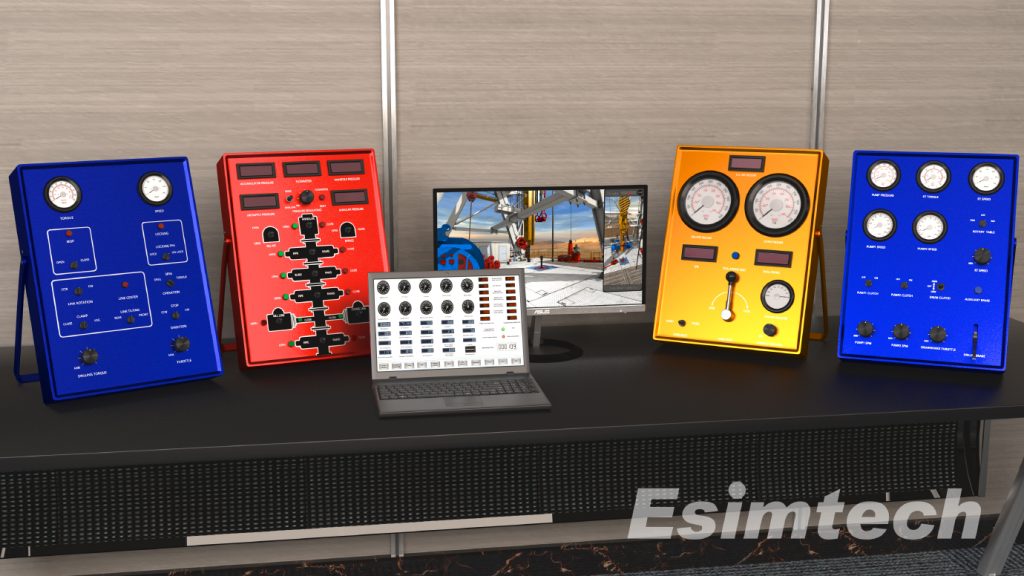
Simulates transient events, such as kicks and wellbore breathing, in real-time.
Helps develop effective strategies for managing well control incidents.
Geomechanical Modeling
Predicts formation behavior under the pressures and stresses imposed by DGD operations.
Reduces the risk of wellbore instability, formation collapse, or fracturing.
Integrated Reservoir Simulations
Combines geological, petrophysical, and drilling data to provide a holistic view of the reservoir.
Supports decision-making for optimal well placement and production strategies.
Conclusion
Dual Gradient Drilling represents a significant advancement in offshore oil and gas exploration. By addressing the limitations of traditional single-gradient techniques, DGD offers a safer, more efficient, and cost-effective solution for managing the complex pressures of deepwater drilling.
Simulation technologies are indispensable for optimizing Dual Gradient Drilling in offshore oil and gas operations. By enabling precise modeling of pressure dynamics, well designs, and equipment performance, these tools enhance safety, efficiency, and cost-effectiveness.
Web guide systems play a critical role in industries like printing, packaging, and textiles, ensuring that materials such as paper, films, and textiles are properly aligned during processing. While web guiding systems have advanced significantly, certain materials present unique challenges that can affect the precision, efficiency, and reliability of the guiding process. Understanding these challenges is vital for engineers and operators to ensure smooth production flows.

1. Thin and Lightweight Materials
Thin materials, such as lightweight films or delicate papers, can be difficult to manage in web guiding systems. Due to their low mass and flexibility, they tend to be more prone to oscillations, fluttering, or wrinkling as they move through the system.
Challenges:
Instability caused by even slight forces.
Difficulty in maintaining proper tension control.
Increased likelihood of damage during handling.
Solutions:
Employing precise tension control systems and guide rollers that offer enhanced sensitivity.
Using edge sensors with finer resolution for accurate detection of web position.
Implementing air-assisted guiding to reduce friction and keep the material stable.
2. Stretchable and Elastic Materials
Materials like elastomers, stretch films, and textiles that exhibit significant elasticity create an added layer of complexity for web guiding systems. The material’s tendency to stretch or contract under load can make it hard to maintain consistent alignment and tension throughout the process.
Challenges:
Stretching or shrinking, leading to misalignment.
Variability in tension along the web length.
Difficulties in accurate edge detection due to shifting material dimensions.
Solutions:
Integration of advanced sensors that can adjust to material deformations.
Continuous monitoring of tension variations, combined with real-time adjustment systems to maintain alignment.
Use of adaptive guides and rollers designed to accommodate stretch and return to original shape.
3. Slippery or Low Friction Materials
Materials with low surface friction, such as certain synthetic films, present another challenge for web guiding systems. These materials tend to slip on rollers and belts, making it hard to control their position precisely.
Challenges:
Inconsistent material movement due to slippage.
Difficulty in achieving accurate and steady guiding without excessive tension.
Increased wear on guiding components from constant adjustments.
Solutions:
Utilizing specialized coatings or textured rollers to improve grip.
Incorporating friction-enhancing surfaces that minimize slippage.
Employing high-precision web guide sensors and adaptive control systems that detect slippage and adjust roller positions accordingly.

4. Heavy and Rigid Materials
While lightweight materials are challenging, heavy and rigid materials, such as thick cardboard or metal foils, also require careful handling. Their greater mass can cause tension control difficulties and requires more force to guide, increasing the potential for system wear and tear.
Challenges:
High force requirements to move rigid materials through the system.
Increased risk of misalignment or strain on the guiding mechanism due to the weight.
Potential for damage to delicate rollers and guides due to high impact forces.
Solutions:
Use of reinforced and durable guiding components, including robust rollers and supports designed to handle heavy loads.
Enhanced tension control systems capable of managing the higher forces associated with rigid materials.
Custom rollers and belts that can provide the necessary support and reduce the risk of misalignment or material damage.
5. Electrically Conductive and Sensitive Materials
Materials such as thin metal films, conductive papers, or electronic substrates often have electrostatic properties or sensitive surfaces that require specialized care during the web guiding process.
Challenges:
Risk of electrostatic discharge (ESD) affecting both the material and guiding system.
Surface sensitivity that can lead to damage if not handled correctly.
Difficulty in maintaining proper tension due to the material’s sensitivity to external forces.
Solutions:
Implementing ionizers or grounded rollers to neutralize electrostatic charges and prevent damage.
Using non-abrasive guiding components and rollers to protect sensitive surfaces.
Incorporating tension control systems with low-force capabilities to ensure gentle handling.
6. Heat-Sensitive Materials
Materials that are sensitive to heat, such as certain plastic films, adhesives, or composite materials, require temperature-sensitive web guiding systems. High temperatures can alter the properties of these materials, leading to shrinkage, deformation, or even damage.
Challenges:
Risk of material distortion or damage under high-temperature conditions.
Difficulty in maintaining consistent alignment due to material expansion or contraction with temperature fluctuations.
Need for temperature control to ensure material integrity.
Solutions:
Integration of cooling systems around guiding rollers to maintain an optimal temperature range.
Use of temperature-controlled guides and rollers that can adapt to heat-sensitive materials.
Implementing real-time monitoring of material temperature to trigger automatic adjustments in the guiding system.
Conclusion
Web guide systems face an array of challenges when working with different materials. From thin and lightweight films to heat-sensitive materials and everything in between, each material type presents its own unique set of obstacles. Overcoming these challenges requires a combination of advanced sensor technologies, precision control mechanisms, and specialized guiding components. As materials continue to evolve in their complexity, so too must the systems that guide them, ensuring efficiency, quality, and precision throughout the manufacturing process.